
OVERVIEW: Cantonese opera has been performed since the 13thcentury. This stylistic theatre incorporates elaborate makeup, costume, music, and movement to convey its moral message to the audience. Still performed today, Cantonese opera has evolved to remain popular in Hong Kong and beyond. Introduction When hearing the term opera, the firstContinue reading
Category: Asia
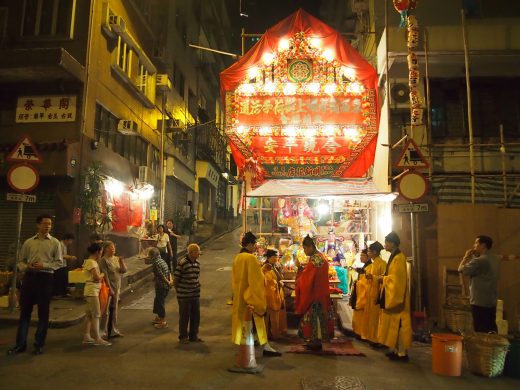
The Yu Lan Hungry Ghost Festival
Overview: Many places around the world have a special day or event for remembering the dead. For many people in Hong Kong, Yu Lan (or the Hungry Ghost) Festival celebrates this very purpose, honoring the dead. This festival occurs every year during the 7th month of the Lunar Calendar, whichContinue reading

Resisting Arrest: Soviet Ballet as Protest from 1955-1980
Synopsis: The Soviet Union of the 1950s, ‘60s, and ‘70s experienced heavy artistic censorship, despite its small strides in liberalism since Stalin’s death. Ballet was an art form woven tightly into Russia’s intra- and inter-cultural presence, and thus strictly monitored by the government. In rare cases, artists channeled ballet asContinue reading

Performance in Hong Kong: Constructing Nostalgia and Nationalism
Overview: The Flower Princess and Rouge were both widely popular performances meant to help Hong Kong forge its own unique identity. While the performances differ in context and form, they are equally contradictory in their function as byproducts of colonization and tools to grapple with an overwhelming sense of nostalgia.Continue reading
Musical Instruments and their Role in Cantonese Opera
Cantonese Opera is a performance style that uses a complex sound range and a diverse orchestration of instruments to complement several aspects of Cantonese Opera. Musical Instruments are an important aspect of Cantonese Opera that are worth more exploration! Introduction to the Music of Cantonese Opera Since the 1930s, CantoneseContinue reading
Catalyzing Individual Identity
Overview Nobel Prize winner Gao Xingjian left China to live on the outskirts of Paris and produced a stunning amount of high quality artistic work. In his play, The Other Shore, the playwright explores the difficulties and benefits of catalyzing individual identity. Global Theatre, in a narrow sense, consistsContinue reading
Japanese Geisha: “The Flower and Willow World”
Introduction: Geisha have long since captured the attention of global theater and entertainment culture; the mastery of their theater and dance performances contributing to their allure as much as their intense privacy and unique entertainment practice. As highly skilled artisans, they are integral to Japanese culture and the study of theaterContinue reading
Cantopop and K-pop
In 1980s and 1990s Cantopop was extremely popular all over the world. However, starting from the mid-1990s and in 2000s it drastically lost popularity and is currently forgotten by most parts of the world it was popular in. My research will present possible factors that played major roles in decliningContinue reading

Mao Zedong, The Cultural Revolution, and Propaganda: The Evolution of Chinese Theater Under the Communist Party
OVERVIEW: Rather than use stage performance to critically reflect on social conditions, Mao Zedong manipulated theatre into corrupt propaganda. This page will delve into the theatrical institutions influenced by the Communist regime, as well as the practices and performances in its peripheries. “Mao Zedong, The Cultural Revolution, and Propaganda…” Introduction:Continue reading
Wayang – Javanese Puppet Theater
OVERVIEW: Wayang, a term for puppetry, is considered to be the oldest freestanding puppet form with the earliest references dating from the 800s on the island of Java, Indonesia. Indonesia has a vast and rich history of puppetry, as there are many different styles of puppetry from Indonesia. The twoContinue reading
