By: Brett Patrick Gasiorowski Background The definition of a mask is “a covering for all parts of the face, worn as a disguise, or to amuse or frighten others.” (Oxford) However, a mask is much more then a disguise. What makes a mask so much more then a piece ofContinue reading

Boesman and Lena: South African Apartheid Theater on the NYC Stage
Introduction South Africa was ruled by a lawful segregation known as apartheid for almost half a century. A hierarchy was put in place to discriminate against black and coloured, or mixed race, members of society. A history of racial oppression and condemnation has led many to question whether America isContinue reading
Makeup in Cantonese Opera
A look into the continuity and change throughout the tradition and meaning of makeup in the history of Cantonese Opera. Introduction Cantonese Opera, also known as Guangdong Drama, dates back to the reign of Emperor Jiajing (1522-1566) of the Ming Dynasty (Run Run Shaw Library, 2016). It is thought toContinue reading

Yoruba in contemporary theater: tracing the legacy of the middle passage
An examination of works by Wole Soyinka and Tarell McCraney demonstrate how Yoruba tradition and cosmology adapted to survive cultural genocide and colonialism. Here, we will examine the path of conception, production, and synopsis as they retrace and reconquer the middle passage. It’s a few minutes before 7:30PM in WaterlooContinue reading
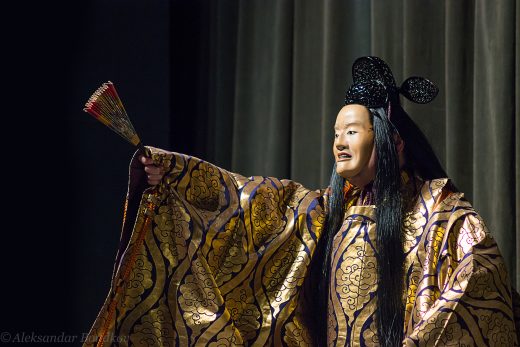
Noh: Past and Present
As the longest surviving theatrical form in the world, Japan’s noh theater has continued to entertain audiences since the 14th century. Noh is characterized by its masterfully crafted masks, elaborate costumes, and highly technical form.
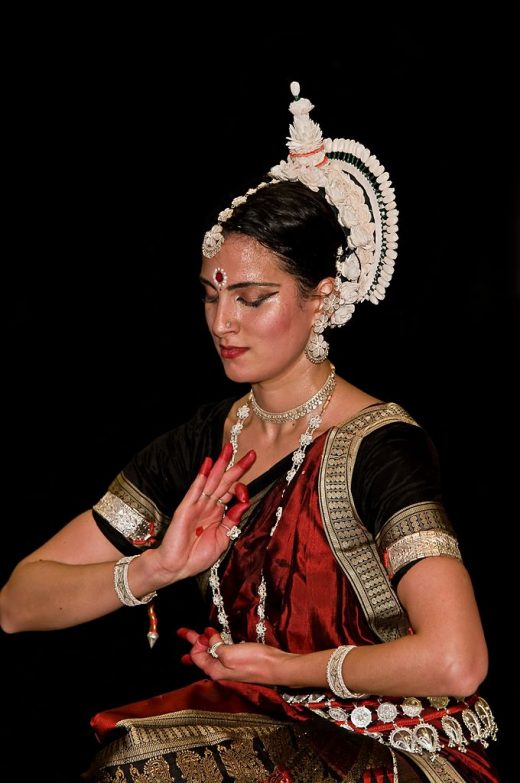
Mudras: The Gestural Language of Indian Theater and Dance
Mudras have been used in Indian theater and dance performance for centuries and have become a part of a larger culture of gestures through time. The process of the Mudra employs the body to explain and perform concepts in an easy to understand way, that is available to everyone in an audience.

Vertep and the Evolution of Ukrainian Puppet Theater
Originating as a reenactment of the Christian Nativity scene, Ukraine puppet shows, known as “vertep,” emerged in the 16th century. Secular elements were later added through satire, traditional characters, and music. Vertep later became a form of protest, surviving the suppression of atheist Soviet occupation, and is still celebrated today.
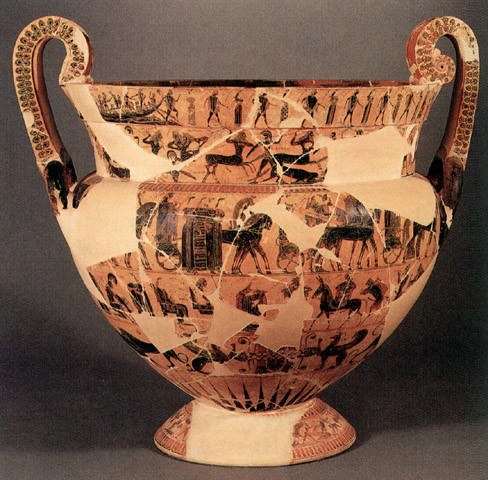
Theatrical Ceramics: Evidence of Greek Performance Traditions Through Vases and Sculptures
Overview Long before cameras and videos, the recorded “footage” of ancient plays was limited to ceramic creations such as decorated vases and intricate sculptures. This page will explore the capturing of Greek theatrical performances on such forms of pottery as well as the process of painting a narrative scene. TheContinue reading

A Play In Which Nothing Happens, Repeatedly
This page entails my creative project and the research that informed it. The play is allegorical to the experience of avant-garde/experimental playwrights in post-Mao China from 1976-1989, particularly the experience of Gao Xingjian. My research provides historical context for the play.
The Spectacle of Kabuki Theater in Japan
Originating in the beginning of the seventeenth century, during the Tokugawa era, Kabuki Theater has historically been an important part of Japanese culture. Kabuki engages with the audience to serve as both a source of entertainment and expression. Rooted in spectacle, Kabuki theater relies on shocking makeup and costumes to entertain their audiences.
